
 Facebook
 X
X
 Pinterest
 Copy Link
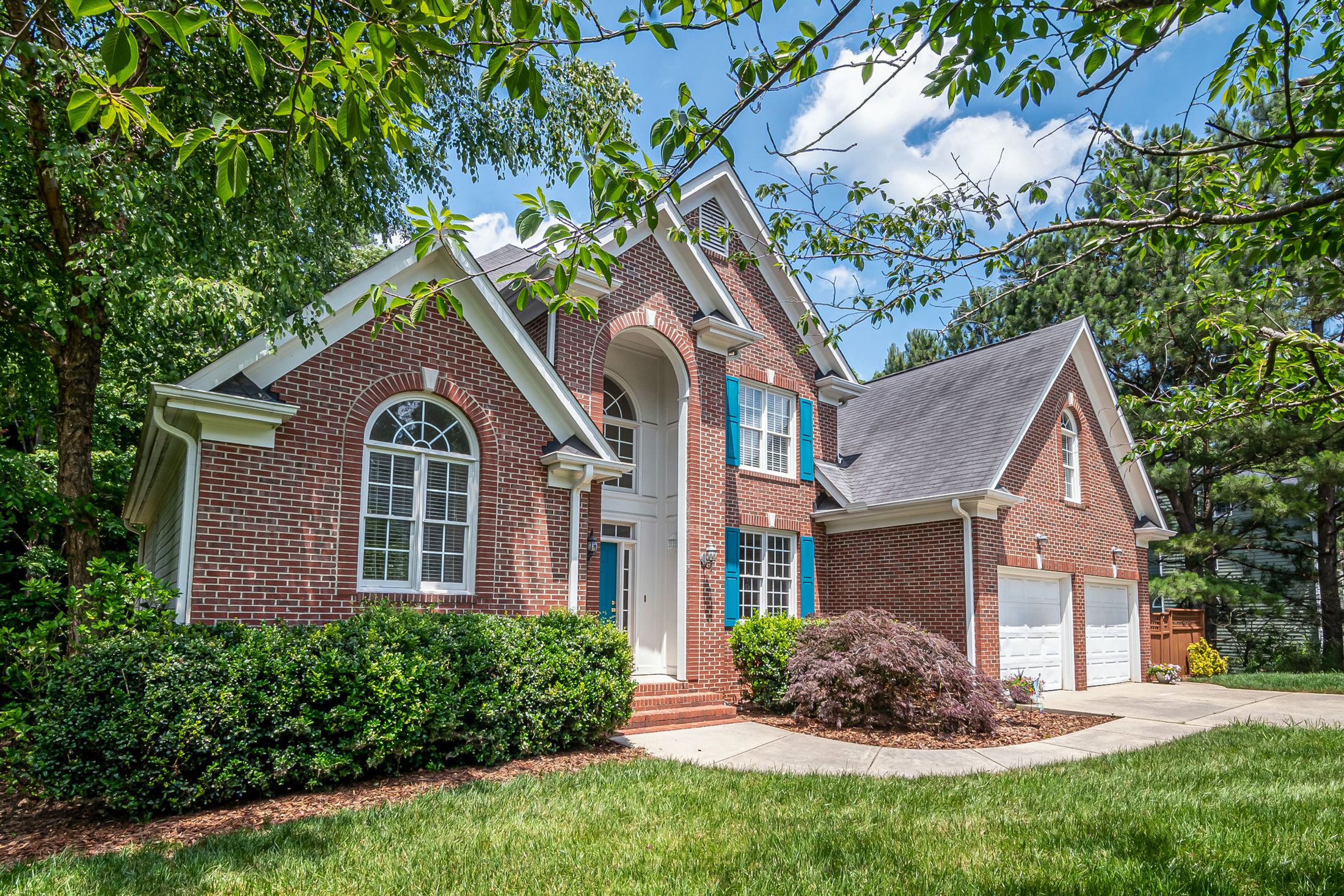
Greater Cincinnati, Ohio • School District Research • Buyer’s Guide
The Short Answer
In Ohio, the school district tied to a home is set by its parcel, not by its ZIP code or what a map app shows. Confirm the district at the county auditor before you write an offer, then use the state’s own report card, the open enrollment rules, and EdChoice to understand your full range of options.
How do I find out which Ohio school district a home is actually in?
County auditor websites publish the school district assigned to every parcel — that is the authoritative source, not the mailing address or ZIP code. A single ZIP code or subdivision can include homes assigned to more than one district.
- Ask for the parcel number. Your agent or the listing can provide it, and the county auditor site will show the assigned school district for that specific parcel.
- Check the auditor for the correct county. Butler, Warren, Hamilton and Clermont counties each maintain their own parcel and school-district records.
- Watch for boundary overlap. Loveland, for example, sits across Hamilton, Clermont and Warren counties — county, school district and taxing jurisdiction all need to be confirmed at the parcel level, never assumed from the city name on the mailing address.
What does the Ohio School Report Card show, and how do I read it?
The Ohio Department of Education and Workforce publishes a report card for every public district and building at reportcard.education.ohio.gov. Report cards are released annually, cover the prior school year, and include component-level data you can also download directly from the site.
Two things matter when you look one up: a report card exists at both the district level and the individual building level, and the report card for the specific building your address is assigned to is the one that applies to you — not the district average. I don’t rank or compare districts against each other; that’s a fair housing obligation, and what fits one family doesn’t fit the next. The published data and the tools to read it are below so you can evaluate it yourself.
Can my child attend a public school outside the assigned district?
If you are relocating to Greater Cincinnati, sometimes, through open enrollment — a public-to-public option governed by Ohio Revised Code 3313.98. There are two forms:
- Intradistrict open enrollment — moving between school buildings inside the same district. Every Ohio district must allow this.
- Interdistrict open enrollment — applying to a different district entirely. Each district’s board decides whether to participate, and sets its own application procedure and timeline. There is no single statewide deadline; the state’s suggested model timeline runs applications due May 1, acceptance notices by June 15, and family confirmation by June 30, but individual districts can and do differ.
Students already enrolled or living in a building’s attendance area, and students accepted the prior year, get priority when a district limits new open enrollment seats. One group is guaranteed acceptance: effective September 30, 2025, families of active-duty U.S. armed forces members stationed in Ohio may apply for open enrollment year-round, and any district must accept them. Confirm current policy and deadlines directly with the receiving district’s superintendent’s office — not a search result.
What is EdChoice, and how is it different from open enrollment?
Open enrollment moves a student between public districts, tuition-free. EdChoice is a separate, state-funded scholarship that goes toward private school tuition. For the 2026–2027 school year, per the Ohio Department of Education and Workforce’s EdChoice fact sheet (published December 2025), there are two paths:
- Traditional EdChoice — for students who would be assigned to a designated EdChoice public school building, along with several other specific circumstances (siblings of prior recipients, foster care, kinship care, and a few others defined by the state).
- EdChoice Expansion — income-based and open to K-12 students statewide (outside Cleveland Municipal School District), with the family submitting household income for verification.
The scholarship amount is currently $6,166 per year for grades K-8 and $8,408 for grades 9-12, paid toward tuition at a participating private school. For Traditional EdChoice, the 2026-2027 application window opens February 1, 2026 and stays open through June 30, 2027, submitted through the private school once a student is enrollment-accepted there; applications submitted after October 14, 2026 are prorated. This is not a path into a different public school — it is a private-school tuition scholarship, and eligibility rules are specific enough that a participating private school’s enrollment office is the right place to confirm your situation.
What should I verify before I write an offer?
A short pre-offer checklist
Confirm the district and the specific assigned school building at the county auditor using the parcel number, not the address alone. Pull the report card for that building, not just the district. If you’re considering open enrollment, check the receiving district’s current policy and deadline directly with its office. If EdChoice is part of your plan, confirm eligibility with a participating private school before you count on it. This research pairs with the rest of your offer preparation, including earnest money and timelines. And treat all of this as one input alongside the property itself — condition, comparable sales, and terms still matter as much as the assigned school building.
Frequently Asked Questions
Does a home’s ZIP code tell me its school district?
Not reliably. ZIP codes and mailing addresses are built for postal delivery, not school boundaries, and can span more than one district. The county auditor’s parcel-level record is the source to check.
How often is the Ohio School Report Card updated?
The Ohio Department of Education and Workforce releases report cards annually, covering the prior school year, at reportcard.education.ohio.gov.
Is open enrollment guaranteed?
No, with one exception. Active-duty U.S. armed forces families stationed in Ohio must be accepted year-round as of September 30, 2025. Otherwise, each district decides annually whether to participate and how many seats to offer, and gives priority to students already enrolled.
Can I use open enrollment and EdChoice at the same time?
No. Open enrollment moves a student between public districts tuition-free. EdChoice is a scholarship toward private school tuition. They are two separate paths, not steps that combine for the same enrollment.
Who verifies my address for open enrollment or district assignment?
For standard assignment, your resident district determines it from your home’s parcel. For open enrollment, the receiving (educating) district is responsible for verifying your residency and requesting your records from your home district.
What if a target neighborhood sits on more than one district boundary?
It happens more often than buyers expect in Greater Cincinnati — a subdivision or even a single street can cross a district line. Always confirm the exact parcel rather than assuming every home in a neighborhood shares the same assigned district.
Let’s confirm the district for a specific address
I can’t tell you which district is right for your family — but I can pull the exact parcel-level district and school building assignment for any property you’re considering, alongside a full look at recent comparable sales.
Kristine Green • Realtor, Coldwell Banker Global Luxury • Greater Cincinnati
