
 Facebook
 X
X
 Pinterest
 Copy Link
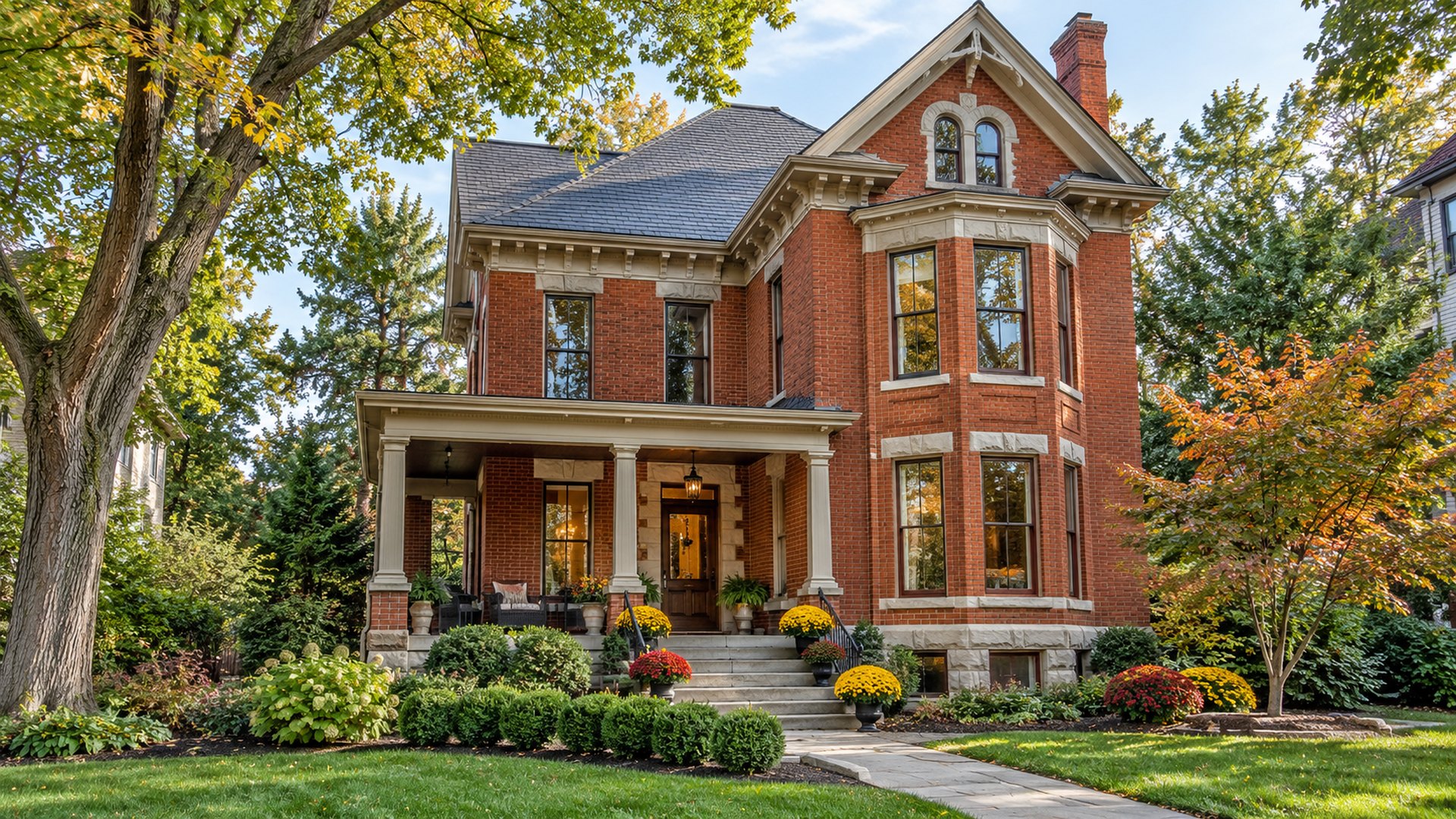
Wyoming, Ohio • Hamilton County • Buying in a Historic District
The Short Answer
Wyoming’s Village Historic District was nominated to the National Register of Historic Places in 1986. If you buy inside the district or a separately listed property, exterior changes that affect 25% or more of a front facade, or 50% or more of a side elevation, require joint review by the Historic Preservation Commission and the Architectural Review Board plus City Council approval. Everything else about the house — condition, systems, price — works the way it does anywhere else.
What is the Wyoming Village Historic District?
Wyoming sits in Hamilton County, about twelve miles north of downtown Cincinnati. The city nominated its Village Historic District to the National Register of Historic Places in 1986. In addition to the district itself, the city’s Historic Preservation Commission page reports 19 homes in Wyoming that are individually listed on the National Register.
The city publishes a Historic Resources Map identifying both the district boundary and the individually designated properties. That map is the document to check first, because district membership is drawn parcel by parcel — a street can have houses of the same age and era on both sides of the line.
The city describes these homes plainly: they are “not museums, but a living part of the community.” Listing on the National Register does not freeze a house in place. It does mean the city has a published process for reviewing significant exterior change.
What architectural styles will you actually find in Wyoming?
The city’s own description of its housing stock covers roughly 150 years of building:
- Nineteenth century — Early Vernacular from the 1800s, then Victorian Italianate, Eastlake, Queen Anne and Shingle styles.
- Early twentieth century — American Four Square, Colonial Revival, Bungalows and Tudor Revivals.
- Post-war — Ranch homes and individually designed Mid-Century Modern houses.
One detail from the city’s description matters more than the style list itself: these styles appear “in houses that range from modest dwellings built for laborers to extravagant homes commissioned by company executives, sometimes in the same block.” That is why a citywide median price for Wyoming is not a number I publish. Two houses 200 feet apart can be built in the same decade, carry the same designation, and sit in completely different price bands.
Do you need approval to change a historic home in Wyoming?
For significant exterior work, yes. The city sets the threshold explicitly: changes that impact 25% or more of a front facade, or 50% or more of a side elevation, require a joint review from the Historic Preservation Commission and the Architectural Review Board, and approval by City Council.
The Historic Preservation Commission is an advisory body established by Chapter 1335 of the city’s Building Code. It evaluates the city’s historic resources and makes recommendations to City Council and the Planning Commission. Its seven seats include two citizens, two owners or tenants from the district or a designated property, and representatives from the Wyoming Historical Society, the Architectural Review Board and City Council. It meets at 7 p.m. on the third Wednesday of each month in the conference room at the City Building.
Two things the city offers before you apply
A pre-application meeting. The Commission encourages owners to come in while a project is still in early design, to talk through how the Design Guidelines apply before drawings are finished.
A courtesy plan review. The city offers a courtesy review of preliminary exterior alterations through its Community Development staff representative. If you are buying with a renovation in mind, this is the call to make during your inspection period — not after closing.
The Commission publishes Design Guidelines for Historic Properties covering foundations, roofs, doors, windows and other features, plus an Application Guide for the review itself. Both are posted on the city’s website. The National Park Service’s Secretary of the Interior’s Standards for the Treatment of Historic Properties is the other document these guidelines lean on.
What should you check before you write an offer on a historic home?
- Whether the parcel is actually in the district. Check the city’s Historic Resources Map for the specific address rather than assuming from the street or the era of the house.
- What you intend to change, in writing. New windows, a porch rebuild, siding replacement, an addition, a detached garage — measure them against the 25% front facade and 50% side elevation thresholds before you commit to a price.
- The review calendar. The Commission meets monthly and significant work needs City Council approval after that. Build that timeline into your renovation plan and your financing.
- Specialist inspections. A general home inspection is a starting point on a house from the 1800s. Slate and tile roofs, plaster, original wood windows, knob-and-tube remnants, stone foundations, cast iron drains and masonry repointing each have their own licensed specialists.
- Who is doing the work. The Ohio State Historic Preservation Office maintains a list of historic architecture consultants who meet the federal professional qualification standards. Contractors experienced with period detail are a different pool from general remodelers.
- Incentives, with the right professional. State and federal historic preservation incentive programs exist for qualifying properties. I am a Realtor, not a tax advisor, so I will not put numbers on them here — take that conversation to the Ohio Department of Development and your own tax professional before you build it into your budget.
If you are comparing northern Hamilton County communities more broadly, my post on what buyers should compare in Blue Ash and Montgomery covers the same kind of parcel-level checking. For the mechanics of the purchase itself, see my first-time buyer guide from pre-approval to closing.
What these guidelines cannot tell you about a specific house
The district boundary, the review thresholds and the style list are citywide facts. They do not tell you what one house is worth, what it will cost to bring up to date, or how long it will take to sell.
I do not publish a citywide median sale price for Wyoming. The city closes too few homes in a given month for a median to describe anything, and the housing stock the city itself describes — modest nineteenth-century dwellings and large commissioned houses on the same block — guarantees that a single number blends properties that have nothing to do with each other. What answers the question is the set of recent comparable sales for houses of similar era, size, condition and designation status, plus what is actively on the market right now.
Frequently Asked Questions
Is every home in Wyoming, Ohio in a historic district?
No. Wyoming nominated its Village Historic District to the National Register of Historic Places in 1986, and the city separately reports 19 individually listed homes. Many Wyoming homes are in neither. The city publishes a Historic Resources Map showing the district boundary and designated properties; check the specific parcel rather than assuming from the street.
What changes to a historic home in Wyoming require city approval?
Changes that impact 25% or more of a front facade, or 50% or more of a side elevation, require a joint review by the Historic Preservation Commission and the Architectural Review Board and approval by City Council. The Commission also offers a courtesy plan review of preliminary exterior alterations and encourages a pre-application meeting while a project is still in early design.
How often does the Wyoming Historic Preservation Commission meet?
It meets at 7 p.m. on the third Wednesday of each month in the conference room at the City Building. Because significant work also needs City Council approval after the Commission reviews it, build that monthly cycle into any renovation timeline.
What architectural styles are in the Wyoming Village Historic District?
The city describes housing that ranges from Early Vernacular of the 1800s through Victorian Italianate, Eastlake, Queen Anne and Shingle styles, into early twentieth-century American Four Square, Colonial Revival, Bungalow and Tudor Revival, followed by post-war Ranch and individually designed Mid-Century Modern homes.
Do I need a special inspection when buying a Victorian home?
A general home inspection is a starting point, not a finish line, on a house built in the 1800s. Slate and tile roofing, plaster, original wood windows, stone foundations, older electrical and cast iron drain lines each have their own licensed specialists. The Ohio State Historic Preservation Office also maintains a list of historic architecture consultants who meet federal professional qualification standards.
Looking at a historic home in Wyoming?
Before you write an offer, I will confirm whether the parcel sits inside the Village Historic District, pull the recent comparable sales for houses of similar era and condition, show you what is actively competing with it, and help you line up the specialist inspections an 1800s house actually needs.
Kristine Green • Realtor, Coldwell Banker Global Luxury • Greater Cincinnati
